
By Richard Schroder, Founder, Anova Consulting Group
Across industries, sales teams consistently face a handful of recurring obstacles that limit their ability to win new business. A formal Win/Loss Analysis Program provides a structured, data-driven approach to identifying and addressing these sales issues. Win/Loss Analysis is a structured post-decision research methodology that helps organizations understand the reasons behind their sales outcomes. By gathering candid, third-party feedback from prospects, companies gain the insights needed to align their sales behavior, product strategy, and customer experience with real market expectations. Organizations that adopt structured Win/Loss programs typically improve win rates within the first year by addressing “low-hanging fruit” surfaced in interviews.
This white paper consolidates findings from over two decades of research by Anova Consulting Group and outlines:
In today’s competitive and data-saturated B2B environment, sales organizations are under unprecedented pressure to demonstrate value and agility. Buying committees are larger, procurement cycles are longer, and decision criteria are increasingly complex. Yet, many companies still rely on anecdotal or internal perspectives to assess why they win or lose deals. Win/Loss Analysis brings empirical clarity to these conversations by transforming buyer feedback into actionable intelligence – helping leaders make confident, evidence-based decisions about pricing, messaging, and sales execution.
A Win/Loss Analysis Program formalizes the process of collecting and analyzing feedback from recent sales situations – both wins and losses. Conducted by an independent third party, it provides candid, unbiased, and statistically valid insights that sales teams can trust.
Successful Win/Loss programs:
A well-executed Win/Loss Program acts as an organizational mirror. Over time, it produces alignment, accountability, and adaptation. By institutionalizing this process, companies can turn every lost deal into a learning opportunity that sharpens their competitive edge.
So, how does a Win/Loss program work? Once the program is designed (see below), interviewers conduct in-depth telephone or web (Teams, Zoom) conversations with new clients or lost prospects. The goal is to glean actionable information, to synthesize it, and to enable continuous improvement across your organization.
Once several interviews are complete, you can analyze the data across interviews to build a picture of trends, themes, and recurring problems or successes. From those recurring themes, you can build actionable improvement plans to help improve sales.
Research across thousands of competitive deal reviews shows that most lost sales are not due to price, product, or market timing. They are due to sales process failures — behaviors that cause prospects to lose confidence in a company’s ability to meet their needs.
Five issues recur in more than one-third of all lost opportunities:
After losing a deal, most salespeople ask the prospect, ‘Why did we lose?’ Unfortunately, the feedback they receive is rarely accurate. Anova’s research shows that prospects tell salespeople the full truth only about 40% of the time. This lack of accuracy occurs for several reasons: prospects don’t want to offend sales reps, salespeople are emotionally invested and may react defensively, and informal feedback processes distort the message. The outcome is predictable: companies optimize the wrong things, while real sales issues persist – leading to a drop in the bottom line for your business.
A successful program requires structure, executive sponsorship, and continuous learning.
Four foundational considerations include:
Once these questions are answered, follow the seven steps below to kick-start your Win/Loss program:
Interested in setting up a Win/Loss program, but don’t know where to start? Contact Anova Consulting Group to learn how a tailored Win/Loss program can increase your sales win rate and accelerate revenue growth.
Winning organizations share one habit: they listen better. They treat every lost deal as a point in a data set, not a defeat. They invest in continuous win/loss analysis, generating a compounding advantage where feedback improves products, strengthens marketing, and empowers sales teams.
Win/Loss Analysis is not a sales audit – it’s a framework for organizational learning. It transforms feedback into actionable intelligence that enhances performance, alignment, and adaptability. Companies that systematically study why they win and lose don’t just close more deals; they build smarter, more resilient organizations.
Richard M. Schroder is the Founder and CEO of Anova Consulting Group. With decades of experience in voice-of-the-customer analysis, he is dedicated to ensuring that Anova provides the strategic insights clients need to make continuous improvement in the areas of product development, marketing, sales, and client service.
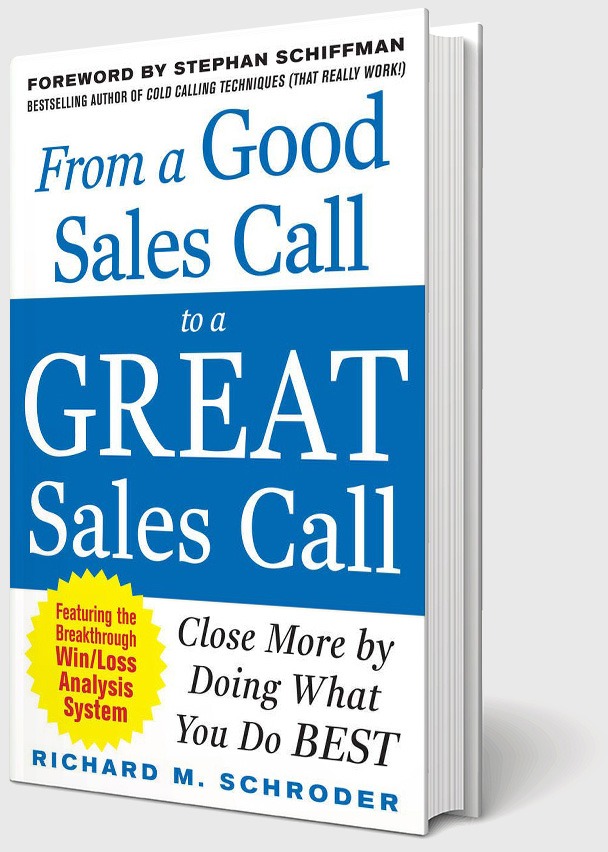
Rich is a recognized thought leader in the business-to-business sales and client satisfaction sector, and he is a sought-after speaker who has published articles in professional journals. He is also the author of “From a Good Sales Call to a Great Sales Call,” which focuses on win-loss analysis. Published by McGraw-Hill, the book is available internationally and has recently been translated into Mandarin.
Prior to founding Anova Consulting Group, Rich served as Managing Director at Chatham Partners, a market research and consulting firm. In that capacity, he was responsible for business development and client relationship management.
Rich is a graduate of Boston College, where he earned a BS in Finance, with honors. He holds an MBA, also with honors, from the Babson Graduate School of Business.

© 2026 Anova Consulting Group, LLC. All rights reserved